
The macula is a small, pea-sized area at the center of the retina that provides the sharp central vision needed for reading, recognizing faces, driving, seeing colors, and noticing fine details. At its center is the fovea, an even smaller region packed with cone photoreceptor cells that deliver the clearest vision and most vivid color perception in bright light.
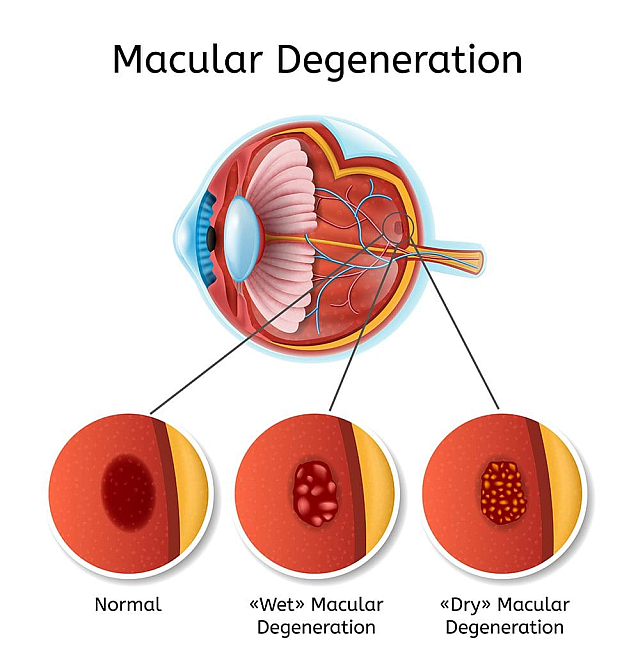
While the macula handles detailed central vision, the surrounding retina supports peripheral vision, helping us detect movement, maintain balance, and stay aware of our environment.
Because it is so active, the macula has high energy needs. Its photoreceptor cells require a steady supply of oxygen and nutrients, as well as efficient removal of cellular waste and protection from oxidative stress. A crucial support system is the retinal pigment epithelium, or RPE—a thin layer of cells beneath the photoreceptors that helps nourish, protect, and maintain retinal function. Understanding the RPE is important for explaining how vision changes with age and for advancing research into retinal diseases.
Learn How To Safely and Naturally Save Your Sight…click here for more info…
