
As people age, vision often changes gradually. Common early effects include needing brighter light to read, seeing colors as less vivid, and taking longer to adjust between bright and dim environments.
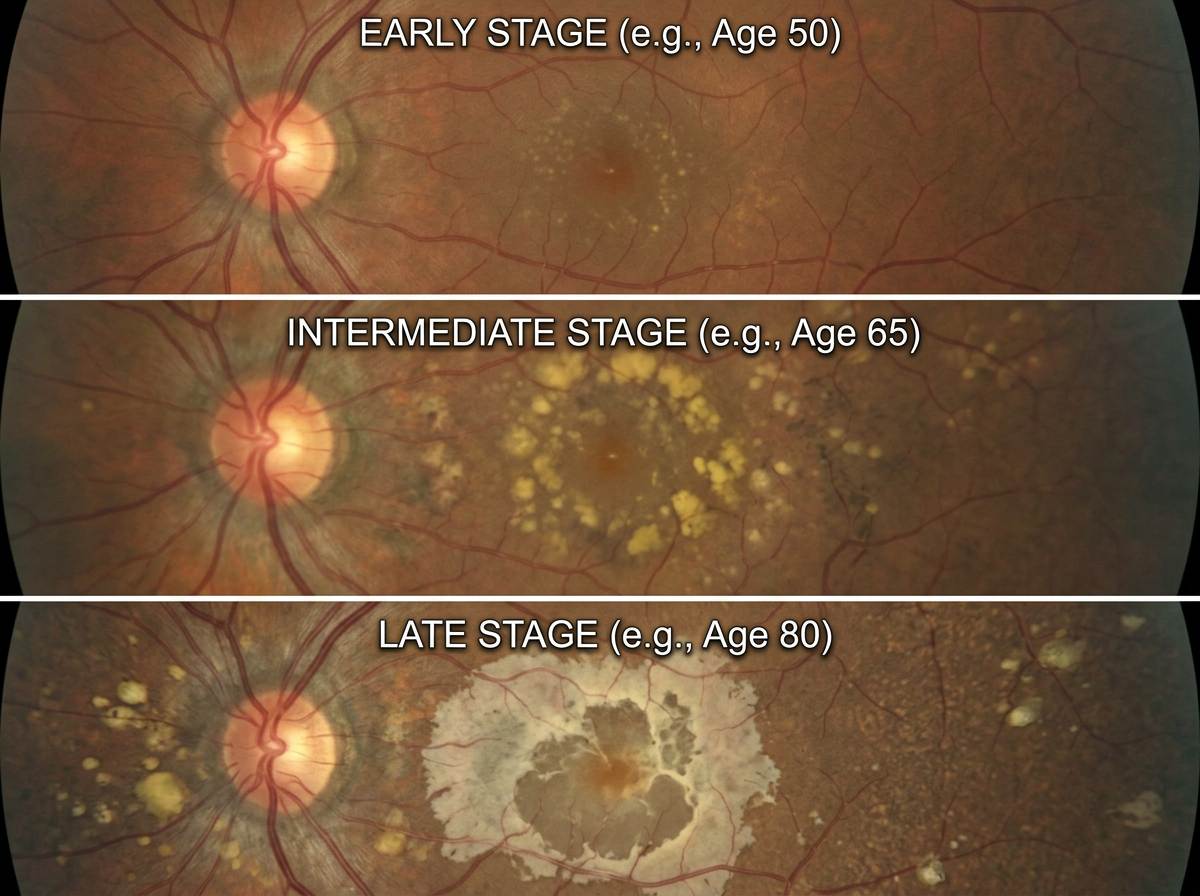
These changes reflect age-related stress within the retina. Over time, the retinal pigment epithelium becomes less efficient at supporting photoreceptors, delivering nutrients, and removing cellular waste. Bruch’s membrane, a layer between the RPE and the blood supply beneath it, can also thicken and become less permeable, making nutrient delivery and waste removal more difficult.
Small yellow deposits called drusen may accumulate beneath the retina as part of aging. While small drusen are common and may not affect sight, larger or more numerous deposits can indicate increasing stress on the retinal support system.
With age, the retina also becomes less able to manage oxidative stress and low-grade inflammation. In some people, factors such as genetics, smoking, ultraviolet-light exposure, and other environmental influences can add to this stress and contribute to the development of age-related macular degeneration.
