
Your Eye’s Built-In Sunglasses
We pack sunglasses for a day at the beach, but did you know your eyes actually have their own internal pair of shades?
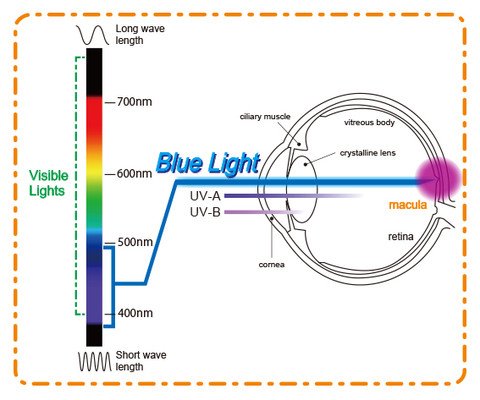
To understand how this works, we have to look at the back of the eye. Think of your eye like a traditional camera: the retina acts as the film, capturing light and images to send to your brain. At the absolute center of that retina sits a tiny, specialized area called the macula. The macula is your visual powerhouse—it’s entirely responsible for your sharp, detailed, 20/20 central vision.
Because the macula is constantly bombarded by high-energy blue light and short-wavelength light, it requires a physical shield to prevent damage. This shield is known as the macular pigment.
The Triple Threat: Three Pigments, One Shield
Your internal sunglasses aren’t made of plastic; they are made of dietary nutrients called carotenoids. Specifically, three pigments work together to form a dense yellow layer that filters out harmful light:
- Lutein: This pigment settles primarily around the outer edges and peripheral areas of the retina.
- Zeaxanthin: This is found closer to the center, concentrating its protection where light focus begins to intensify.
- Meso-zeaxanthin: The heavyweight champion of central vision. It is heavily concentrated right at the absolute center of the macula, providing the ultimate defense where light exposure is highest.
When these three pigments are abundant, they efficiently absorb stray light and shield the delicate photoreceptors beneath them. In our next post, we will look at what happens to this incredible shield as we get older.
Learn How To Safely and Naturally Save Your Sight…click here for more info…
